Problems with Ukrainian EIA Legislation
What do the EIA law and the weather forecast have in common?
Neither the first nor the second obliges anyone to do anything...
Those of you who follow the activities of ZF have probably noticed that from time to time we publish information on our website or on our Facebook page about the EIA procedure (ENVIRONMENTAL IMPACT ASSESSMENT) for various types of economic activity. In particular, we can recall the scandalous attempt by the Ministry of Environment during Poroshenko's presidency to "push through" a positive conclusion on the EIA report (registration number in the EIA register 20181081879) for an enterprise that planned to process mercury-containing waste literally a few kilometers from the center of Kharkiv.
Quite recently, there was an equally scandalous attempt to give a positive conclusion on the EIA report to an enterprise that plans to extract chalk in the Dvorichna district of Kharkiv region (registration number in the EIA register 20197294194). The Chalk Mountains - the pearl of Slobozhanshchyna - are located literally side by side with the Dvorichansky National Nature Park, do not have protected status, and for officials from the Ministry of Energy and Environment, they turned out to be just a mountain of cheap building material. These and many other frankly insane decisions of authorities at various levels were blocked by the public precisely thanks to the Law of Ukraine "On Environmental Impact Assessment". But many, unfortunately, could not be blocked. According to ZF's experience, these include the EIA of the Bohodukhiv household waste complex (registration number in the EIA register 201865920/1957), where the head of the local utility company submitted knowingly false information about the object under construction, and Kharkiv Regional State Administration officials, despite written statements from ZF, pretended not to notice this violation. The EIA of the Khorosheve gas-bearing area, where Kharkiv Regional State Administration officials handed over a territory with protected status to a gas production company.
To a large extent, such failures should be attributed to the imperfection of the EIA law itself.
A small but necessary explanation. I do not put a negative meaning into the word "imperfection" in relation to the authors of the law. In this case, it is an imperfection of the same kind as a suit bought in a ready-to-wear store - it simply requires tailoring to fit the figure.
For simplicity, let's divide the problems of the Law of Ukraine "On EIA" into blocks. The first block will be called "tracing paper". The abolition of Soviet legislation on environmental expertise and the implementation of EIA provisions instead is one of the requirements of the Association Agreement between Ukraine and the European Union. And although the Ukrainian version has a number of differences, the Law of Ukraine "On EIA" is largely a tracing paper from EU Directive 2011/92/EU. And here the problems of incompatibility begin. What worked confidently in the EU legal space does not work in the legal space of Ukraine. It does not work for absolutely understandable reasons, among which are the law enforcement and judicial systems (or rather, their absence), and the corrupt oligarchic system of governing the country, and ... here each reader can add their own reasons, but the fact remains.
The second block of problems will be called "veto". Before it even saw the light of day, the Law of Ukraine "On EIA" was castrated by Poroshenko's presidential veto. For those who want to delve into the essence of this veto, we recommend reading the article on the European Pravda website.
For others, we will simply inform: the Law of Ukraine "On EIA", submitted for the President's signature before the veto, and the Law signed by the President after the veto, are two different Laws. Moreover, the latter option is more loyal to big business and less loyal to the environment.
The next block of problems will be called "a cog without a mechanism". And its essence lies in the fact that the EU Directive on EIA is one of the cogs in the European mechanism for environmental protection. In Ukrainian realities, EIA is also a cog, but the mechanism in which this cog should play its role is, unfortunately, absent in our country. At least, it is absent in the sense that the European legislator understands it. One cannot really call a legal mechanism an amazing mixture of rudiments of Soviet legislation with recognized complaints of normative acts adopted over the past 30 years in the field of environmental legislation!
It is obvious that such a mechanism should have appeared as a result of further implementation of EU environmental norms into Ukrainian legislation. But 6 years have passed since the signing of the Association Agreement, and the cart is still there.
The approach to EIA in EU countries, in particular, is that comments on a multi-page document full of complex terms called "EIA Report" are made, first of all, by various state bodies. Specialists of competent authorities do this during working hours and, of course, receive a salary for it. The public only has to check and, if necessary, supplement the decisions made. In this case, the review periods established by the procedure of European EIA laws seem absolutely reasonable. Our realities are completely different. Officials either have not seen the EIA report at all, or consciously pretend that they have no comments on the report. In this case, public activists are forced to independently study the EIA report, make their comments and submit proposals for their elimination. And for those ten working days from the publication of the report to the beginning of public hearings, which Ukrainian legislation allows, it is not an official who gets acquainted with the report, but a public activist, and he does it in the evenings after his main job. At the same time, the EIA report can contain 500 or even 700 pages of text that is difficult to understand. Text that requires a serious level of knowledge in various fields ...
Another block of problems of the Law of Ukraine "On EIA" is access to justice. This very accessibility is practically non-existent in Ukraine. On the one hand, access to justice in our realities is severely limited by the size of court fees and the low standard of living of the population. Agree that not everyone can afford to pay the court fee, come (and not once) from a small village to the district center for a court hearing of the first instance, and later - for an appeal court hearing. True, there are isolated cases when the court, by its decision, exempts the plaintiff from paying the court fee. But participating in court hearings remotely in our country, apparently, is allowed only to fugitive presidents. In addition, imagine a situation: a community of a small village (for example, Kruchyky village, Bohodukhiv district, Kharkiv region) is suing a gas production company (for example, affiliated with the Minister of Internal Affairs). What do you think: which of the parties is able to invest more financial resources in the litigation? And who has more organizational, administrative, corrupt, how can we do without them, ways of pressuring the court? In general, we have dealt with access to justice ...
And since we are talking about justice, we cannot but mention a problem that is at the intersection of two blocks - "access to justice" and "a cog without a mechanism". Remember, we talked about the incomparable capabilities of big business and public activists, and about the fact that the public was actually forced to take on the work of officials. But cynics from one well-known chipboard manufacturer thought this was not enough. They filed a lawsuit in court to protect honor and dignity, and the defendants in the case are environmental activists from Rivne who participated in the EIA procedure. As they say - anyone can offend a public activist. So, returning to the topic of our review, it must be said: we do not think that the chipboard manufacturer would have shown the same persistence and cynicism if, instead of public comments on the EIA report, officials of the regional administration had made them ...
Another block of problems has recently been thrown up by life. This block of problems is called a pandemic. Here, nothing could have been foreseen at the stage of drafting the Law, but this does not change the essence of the matter: the COVID-19 coronavirus pandemic makes it impossible to implement a number of norms of the Law of Ukraine "On EIA". First of all, this concerns the holding of public hearings. Here, erudite specialists can object to me that, they say, European legislation does not provide for public hearings at all - only public discussion, and it, as is known, is conducted in an epistolary genre. By the way, laws that provide for public access exclusively in the format of public discussion also exist in Ukrainian legislation. An example of this is the Law of Ukraine "On the Regulation of Urban Planning ACTIVITIES". Unfortunately, the problem is not only in public hearings. The Law of Ukraine "On EIA" also provides for the possibility of familiarizing oneself with the EIA report in the premises of local self-government bodies - not all citizens have access to the Internet, not everyone knows how to use the Internet.
The pandemic, and with it the Ministry of Energy and Environment, actually deprived such people of the right to participate in decision-making on issues concerning their safety and health. During the quarantine, citizens' access to the premises of local self-government bodies is actually closed. Thus, people are offered to discuss a document they have not seen.
Each of these blocks should have its own approaches to solving the problem. In particular, ZF and representatives of other public organizations of Kharkiv region at the end of last year took part in a forum on the judicial review of disputes arising in the process of implementing the EIA procedure, conducted by the Cassation Administrative Court as part of the Supreme Court of Ukraine.
And at the beginning of this year, ZF submitted an appeal to People's Deputy, head of the subcommittee on approximation of Ukrainian legislation to EU legislation of the Verkhovna Rada of Ukraine Committee on Ukraine's Integration with the European Union, Maria Mezentseva, with a request to hold an on-site committee meeting in Kharkiv dedicated to the problems of implementing European legislation.
Immediately after the announcement of the quarantine, ZF proposed to several ministries to consider the issue of suspending the EIA procedure for those reports during the quarantine period, where
public hearings have not yet been held.
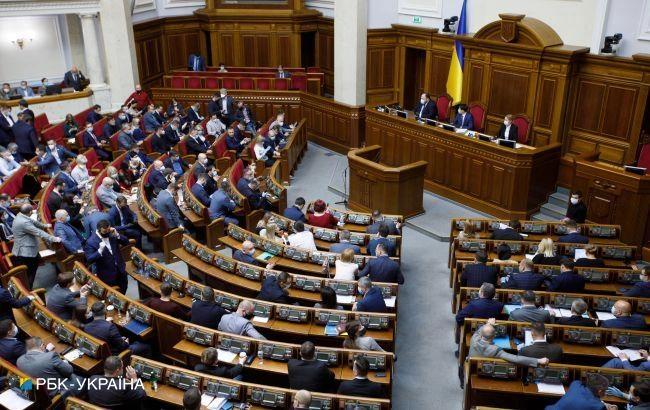
Of course, the shortcomings of the Law "On EIA" are seen not only by ZF, and not only ZF is trying to solve them. Quite recently, environmental activists from Rivne registered a petition on the website of the Verkhovna Rada of Ukraine with a proposal to amend this Law. The format of the petition does not allow proposing any specific changes. This task can be solved by a series of round tables with the participation of specialists from various fields and, of course, including the participation of public environmental organizations. The purpose of the petition is to draw the attention of the People's Deputies of Ukraine to the existence of the problems described above.
To those of you whom we managed to convince with our long text that the Law "On EIA" needs to be revised, I suggest, after registering on the VR website, to vote for the submitted petition by following the link.
In addition to participating in the improvement of an important Law, such a vote will demonstrate your support for the environmental community of Rivne.
Deputy Head of the Coordination Council of ZF A. Bogdanis
Source