Ecoterrorism or genuine concern for the environment: why cases of manipulation on the topic of ecology have become more frequent
Recently, the All-Ukrainian Forum "Ukraine 30. Ecology" was held in the country, where much attention was paid to environmental control. At the same time, professional ecologists note that a new phenomenon has appeared in Ukraine that discredits the very idea of environmental protection and all the work done to improve the state of ecology.
What is "environmental terrorism" and who benefits from it
This refers to a new type of terrorism called "environmental terrorism". In the last century, this term meant precisely targeted actions against civilians and the environment, but later in many countries attempts were made to resolve political issues under the guise of environmental protection. The main goal of the organizers of this action is to sow fear and panic among the population in order to manipulate public consciousness. Against this background, cases of economic damage to the state or private firms are not uncommon.
"Certain groups of activists, under the guise of environmental activities, under the brand of greening, seek to achieve some goals, completely different mechanisms are used in this case, ranging from eco-blackmail to certain custom-made actions," explained Lyudmyla Tsyganok, president of the professional association of ecologists of Ukraine. - The escalation of eco-terrorism in Ukraine is intensifying. This is a struggle either for political motives, if it is before elections, some dividends. If between elections, then it is a struggle for resources, a struggle for territory, for a specific business."
Unfortunately, such activity of eco-terrorists scares away potential investors and discredits the environmental movement. Moreover, such actions negatively affect Ukraine's integration into the European Union, where the main focus is on environmental protection.
"Environmental terrorists are not those who protect the environment, but those who, with radical and illegal methods, blasphemously encroach on business entities for their selfish interests, in no way related to improving the state of the environment. We will appeal on behalf of the entire PAEU to the business ombudsman, people's deputies, the Cabinet of Ministers of Ukraine and all those who care about the sustainable development of Ukraine, in order to prevent the escalation of such phenomena in Ukraine, to synchronize the interests of business, the state, society and nature," commented the professional association of ecologists.
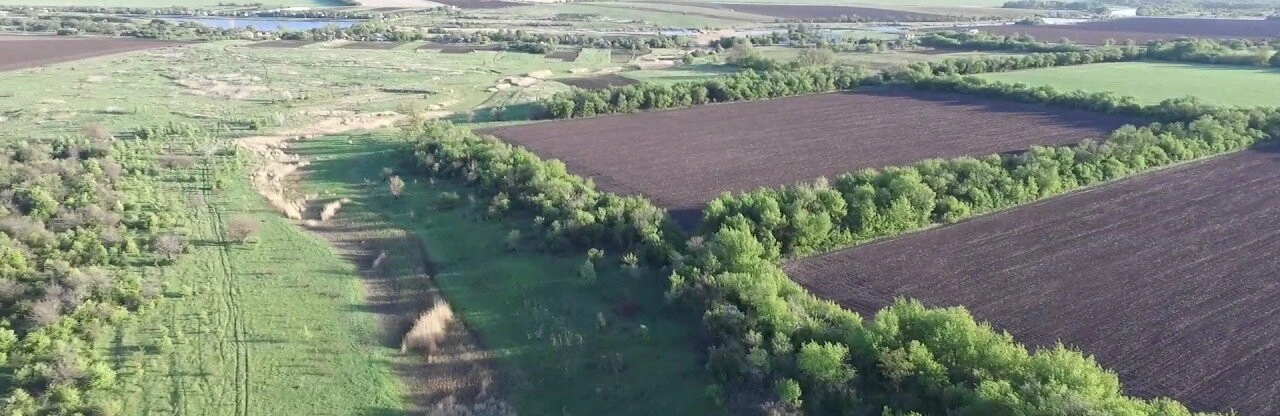
As is known, in Vilnyansk district of Zaporizhzhia region, a large investment project for the construction of a concentrating plant and the development of a quarry for kaolin extraction has been planned for several years. Kaolin itself is a valuable raw material for the production of ceramics, paper, rubber, plastics, medical products, paints and varnishes, adhesives, mastics and other materials.
The process of kaolin extraction is planned to be carried out by open-pit mining without the use of any explosives or chemical materials, in accordance with all international environmental safety standards. The raw material from the quarry will go to production. There, using specialized equipment and exclusively water, kaolin will be separated from sand. Then, the "white clay" is dried and packaged. This is a traditional kaolin extraction process used in many countries around the world, and there is nothing supernatural about it. The production has a number of obvious advantages - stable replenishment of the local budget through taxes, providing the region with valuable raw materials for the industrial sector, and the creation of new jobs with competitive wages.
However, some community representatives strongly opposed the appearance of the quarry, as representatives of the public organization "Volterra" allegedly found an excess concentration of uranium for drinking water in some groundwater analyses, although this water is intended to be used exclusively for industrial purposes, and also stated that officials from the Ministry of Ecology "ignored the natural value of the territory."
"Channel 5" notes that the situation with the Bilyaivsky enrichment plant in the Zaporizhzhia region may be precisely an example of environmental terrorism, when pseudo-activists have been intimidating residents of nearby villages for several years and inciting them to protest.
"All facts of ecoterrorism are evident. Because a specific company, without any evidence of the harm that will be caused to the environment of a specific region, without relying on any specific facts, continues to oppose the launch of such an object," commented Lyudmyla Tsyhanok.
Unfortunately, environmental activists deliberately exploit the lack of real knowledge among local residents about the principles of production and environmental risk assessment, and incite the population against investors. Pseudo-activists appeal to emotions, thereby provoking people to fight against things whose essence they themselves poorly understand.
Long before any preparatory work began, protest actions, rallies, and the distribution of dubious leaflets appeared with theses that the plant is incredibly dangerous, that there is a tenfold excess of radiation and uranium in the water on the developed site, and that kaolin extraction will lead to nothing less than human deaths. The initiators of the protest actions do not try to answer the questions of local residents and explain what the Bilyaivsky deposit development project actually represents. Unfortunately, not everyone wants to hear expert opinions, obtain permits, or simply fact-check the parties.
Many people, at the same time, sincerely want to protect their territory, their home. And therefore, they are led by unscrupulous activists.
Undoubtedly, there must be a dialogue between business and the population. Currently, a working group on problematic issues of the Bilyaivsky enrichment plant is meeting at the Zaporizhzhia Regional State Administration. In the near future, conclusions will be provided by the radiation monitoring department of the natural environment of the Ukrainian Hydrometeorological Institute of the National Academy of Sciences of Ukraine regarding the safety of selected kaolin and water samples.