Ecology = economics
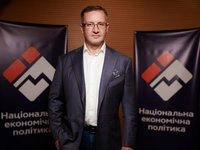
Ihor Umansky, Head of the "National Economic Policy" platform, twice Minister of Finance of Ukraine
For the past few decades, the world's leading countries have been constantly working on reorienting their economies towards rational use of resources and nature conservation. For this purpose, an ecolaboratory is engaged, which ensures control of environmental sustainability and an accurate assessment of the impact of industrial processes on the environment.
And this is not just a noble mission. By changing the principles of industrial exploitation of natural resources and subsoil, they primarily think about the economic prospects of such an approach.
If you look at the development of events from this point of view, this whole story begins to play with new colors. The large-scale "green" programs implemented by the USA and Europe have all the signs of new protectionism. Under the banner of restoring eco-balance, access of products from competing countries to domestic markets is limited. This means that this is another round of giving preferences to their own producers.
Competing with each other, two global players encourage the whole world to join a competition that can be compared in scale to an arms race. And Ukraine will either take part in this eco-race, or it will be on the sidelines, suffering from quotas and sanctions, losing markets and weight in the political arena. And it will remain a raw material appendage with a polluted environment.
European Green Deal
In December 2019, the European Union approved the "European Green Deal" with an ambitious goal: to transform Europe into a climate-neutral territory by 2050. The European Commission will allocate one trillion euros to implement the tasks of the Green Deal!
By 2030, it is planned, in particular:
- reduction of greenhouse gas emissions by 55% compared to 1990;
- transition to clean technologies and renewable energy sources;
- reduction of greenhouse gas (CO2) emissions in the transport sector by 90%;
- abandonment of internal combustion engines and introduction of the Euro-7 emission standard in 2025.
This is only the beginning of radical changes in the EU's environmental policy, and Ukraine cannot stand aside. We must seize the chance and bet on synchronizing public and economic relations within the country with the "European Green Deal" and finally switch to a new technological order.
What if Ukraine doesn't do this?
The introduction of a new technological order requires colossal financial resources, which we do not yet have. Therefore, the government must focus all its efforts on attracting investments. Otherwise, Ukraine will find itself on the sidelines of European civilization. Literally.
As part of the new industrial policy on decarbonization, the European Commission is allocating 100 billion euros to support the transition of member countries to a climate-neutral economy, focusing on the most carbon-intensive regions.
At the same time, in April 2021, the European Commission introduced a carbon dioxide emissions tax, which will be levied on imports into the EU from countries with low CO2 emission reduction standards. This tax will protect domestic producers transitioning to new standards from competitors using cheaper but less environmentally friendly methods.
Therefore, Ukraine, which still exploits the industrial legacy of the former USSR, will find itself in a situation best described by the phrase: "Change or die."
What to do?
Many times we have made a regrettable mistake. We ignored global trends, believing they were "somewhere out there." Only the next day did we discover that they were here - and directly affecting our lives.
We must accept as a given the fact that saving outdated production no longer makes sense. Instead, we need to focus on creating and implementing new technologies to gradually transition to a new technological order.
Such a transition requires political will, an understanding of global trends, and the formation of a different way of thinking. We will either move in the wake of global players, or we will remain a third-world country, suffering from sanctions and quotas, depleting our natural resources, and constantly destroying our own ecology.