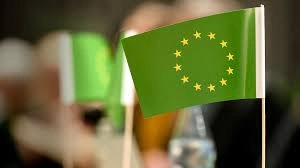
The European Green Deal and Ukraine: Are we at the table or on the menu?
The European Green Deal and Ukraine: are we at the table or on the menu?
In a few years, the existence of a balanced environmental and climate program in neighboring countries will be as much a requirement from the European Union as anti-corruption policy or an effective justice system is today.
History leads those who go and drags those who resist. EU officials first spoke about the European Green Deal in late 2019 when Ursula von der Leyen became the head of the European Commission. This is how the EU satisfied the public demand, especially from young people, to counter global climate change.
The goal of the Green Deal is super ambitious: to ensure the economic growth of EU member states and to abandon the consumption of oil, gas, and coal by 2050. The so-called climate neutrality will require both innovative technological solutions and an increase in the area of forests and natural parks to absorb CO2 emissions into the atmosphere.
The name European Green Deal is consonant with Roosevelt's New Deal, and also means a change in established patterns. By the way, there is a similar initiative in the USA, the New Green Deal, which may become a reality if the current administration changes.
So, the European Green Deal is a political concept that is gradually taking shape in strategies, plans, and legislative initiatives that will increasingly influence the internal and external policies of the EU. In a few years, the existence of a balanced environmental and climate program in neighboring countries will be as much a requirement from the European Union as anti-corruption policy or an effective justice system is today.
The task facing the Ukrainian government right now is to determine Ukraine's place in this new paradigm. Therefore, our participation in the European Green Deal also became one of the topics of the 22nd Ukraine-EU Summit, which took place in Brussels on October 6.
Something about misconceptions
We often perceive environmental protection as something separate from "normal life". They say, there is a war in the country, coronavirus, tariffs, salaries-pensions, GDP, and somewhere after that - environmental issues. In many ways, this is the result of a long-term distortion of "green" topics in Ukrainian politics. If in the European Union the environmental component of election programs has long become a specific list of actions that politicians promise to do (and do), then in Ukraine it is usually general promises like "to care for the environment and build a waste processing plant."
Citizens still signal to politicians that environmental protection can be dealt with later, because Ukrainians are not yet "on fire". In fact, it is "on fire". Dust storms, forest fires, drought - all these are events of 2020 in Ukraine and clear signs that climate change has reached us too.
So the European Green Deal is a long-term goal, on the basis of which new interstate unions and alliances will emerge, leadership and cooperation will be built in various manifestations - political, diplomatic, technological, economic. The new European agenda is not just about reducing greenhouse gas emissions or abandoning plastic. It is, first of all, about a major economic transformation that will accompany such a transition. And it will make comfortable life possible in a world without fossil fuels and internal combustion engines.
Those who stay on the sidelines will lose. Those who play the long game and are at the forefront of change will win, and thus will shape this new great policy. "You're at the table, or on the menu," as a friend of mine says. It is important that Ukraine is among the countries at the table with the "green menu".
Challenges and opportunities
International financial institutions refuse to finance projects aimed at the development of dirty extractive industries. Obvious outsiders are the coal industry and thermal energy, which are losing strategic competition to green energy sources. In the EU, despite the presence of a powerful national "coal lobby" and dependence on coal-fired power plants, countries are closing all their mines (those that have them). Belgium, France, Great Britain and others have already stopped or almost curtailed coal mining, even Poland has promised to close the last mine in 2049.
Fossil fuels, which were the engine of the First and Second Industrial Revolutions, are not suitable for the world of the Fourth. Humanity's energy needs are growing and will continue to grow, but the planet simply does not have that much fossil fuel. And it will not withstand the emissions produced by technological progress. What will happen to world industry can be seen in the example of car engines: increasingly stringent government environmental requirements for emissions with a gradual ban on the entry of non-environmental cars into European cities and towns. As an example, with the help of the green course, Germany wants, if not to win, then at least to level the situation in the markets for its car manufacturers, who are currently losing competition to Asian and American manufacturers of electric cars and electric buses.
What can be said about Ukrainian industry, which is often outdated, energy- and resource-intensive, stuck in a technological order of several decades ago. Without modernization, it simply will not find a place in the 21st century. This requires a strategy of "innovative reindustrialization" that will combine industrial, economic and environmental policies for energy-efficient and high-tech modernization. Those who have already invested in technology renewal, despite difficult access to international financing and lack of state support, will definitely gain competitive advantages, and not only in the EU market.
Incentives and punishments for Ukraine
The ecosphere is not a "hut" in which one can lock oneself within state borders. Therefore, the European Green Deal will contain a system of "carrots and sticks".
The first "whips" are already known. This is the so-called carbon border adjustment mechanism (CBAM), implemented, for example, in the form of an additional import duty for goods whose production leaves a significant carbon footprint. According to preliminary calculations by industry experts, additional payments by Ukrainian companies when exporting to the EU may increase by almost 600 million euros per year. Electricity, metallurgy, cement production, and the chemical industry fall under the "whip". This is the price for those who prove unable to see a broader perspective beyond their current self-interests. Countries that prove the compatibility of their climate legislation with European standards, or enterprises that have already been modernized according to such standards, may be exempt from this duty.
Let's be frank, the carbon border adjustment mechanism is a well-thought-out protectionist move to develop its own science and innovation, and to support European industry, shifting part of the costs to countries that do not encourage national businesses to modernize. It was designed to reduce dependence on energy resources from the Russian Federation, prevent the relocation of production from the EU to other countries with less stringent environmental standards (carbon leakage), and ensure fair competition with generously subsidized Asian manufacturers. However, it is now being considered for widespread implementation, for everyone, even for countries that are official candidates for EU membership. Thus, it will be possible to produce megawatts of electricity and smelt thousands of tons of steel, but they will turn out to be too expensive on the EU domestic market due to this additional duty. Let's not forget about the reputational risk that European consumers will be forced to prefer countries and suppliers with a lower carbon footprint.
It is precisely to be able to influence processes, develop joint projects and minimize potential threats that Ukraine has chosen the strategy of "early involvement" in the European Green Deal. This was discussed at the meeting of Prime Minister Denys Shmyhal with Frans Timmermans, the relevant Vice-President of the European Commission. Issues of energy efficiency and a just transformation of the coal industry were discussed. And also - Ukraine's participation in hydrogen initiatives, regarding which the EU is already experiencing a real "fever", considering "green" hydrogen as a substitute for fossil fuels for energy, road and rail transport, aviation and metallurgy. It is important that Ukraine has the capacity to produce hydrogen and transport it to the EU through our gas transmission system.
Regarding various aspects of the impact on the Green Deal, a position paper has been drafted, which we already submitted to the EU in August, and in which Ukraine outlined its vision for possible participation and its own red lines. Among other «carrots» of early involvement are market access, integration into value chains, joint investment projects, affordable loans, and grants. For example, within the framework of the 22nd Ukraine-EU Summit, Deputy Prime Minister for European and Euro-Atlantic Integration Olha Stefanishyna signed two eco-oriented agreements that can be considered as an «entry point» into the new EU green policy. This is an agreement for 10 million euros for measures under the program «Climate Package for a Stable Economy: (CASE) in Ukraine» to finance projects for the development of a resource-efficient economy in Ukraine, stimulate the transition to a circular economy, and reduce greenhouse gas emissions. And an agreement with the European Investment Bank (EIB) for 300 million euros for the thermal modernization of public buildings in Ukraine.
These are the first funds that Ukraine will receive within the framework of the new EU environmental policy. They can be considered as a trial investment by the new European Commission, and the funding of further, much more global projects will depend on the effectiveness of their use.
For the EU to hear Ukraine
We have agreed with European partners on launching a high-level Ukraine-EU dialogue on the European Green Deal and are starting to develop a Roadmap that takes into account the UN Sustainable Development Goals until 2030 and the provisions of the Paris Climate Agreement, which Ukraine joined in 2016. And this is not just «a conversation» between officials of Ukraine and the European Union. This is, in essence, a political and legal platform where further practical steps are discussed and formed. We proceed from the fact that Ukraine shares the ambitious EU climate agenda and is ready to move in this direction, currently — at the pace of our objective capabilities. Then the European Union, when forming the Green Deal policy, must take into account the obligations that exist within the framework of the Association Agreement between Ukraine and the EU and the modernization capabilities of the Ukrainian economy. A similar moderately ambitious position is held by Eastern European countries, EU members, but they receive huge support from EU funds for the transformation of their economy, access to which we do not yet have.
Our diplomacy and the Ukrainian lobby in the EU must work hard to minimize the impact of the carbon border adjustment mechanism, and to ensure that other non-tariff trade regulation instruments do not create additional obstacles for the integration of Ukrainian business into the EU market - as provided for by the Association Agreement and WTO commitments. The European Union, which is being built as a continent without borders, should not build "carbon borders" with those countries that aspire to membership in it - this should be our principled negotiating position.
And for this, we need to prove that the greening of the country and the reduction of harmful emissions are our own priority. For this, appropriate legislation must be adopted, and relevant environmental measures, the energy efficiency block, and the development of green energy must be adequately financed in the budget of Ukraine. Businesses also need to take a closer look at the issue of climate change impact, and the state needs to think about greening support programs.
To be continued
Environmental protection, the fight against climate change, and green recovery from the coronavirus will certainly become one of the main topics in the coming years within the framework of future Ukraine-EU summits, contacts between people's deputies, business, and the expert community.
Weakening or non-application of the carbon border adjustment mechanism to Ukrainian producers is an intermediate tactical goal that will show the correctness of our complex movement towards a climate-neutral Ukraine within the framework of European integration. And Ukraine's strategic goal should be to develop an economic strategy for the Ukrainian Green Deal and achieve climate neutrality in the second half of the century, which we and almost all other countries of the world have committed to by signing the Paris Climate Agreement.
And it is better that our movement towards climate neutrality takes place through energy-efficient and technological modernization of industry, and not deindustrialization and loss of markets; through the development of organic land use, and not degradation and devastation of lands due to climate change; through our own production and assembly of electric vehicles and charging stations, and not the import of used non-environmental cars; through a just transformation of coal regions and the development of RES, and not a constant increase in subsidies and problems for green investors.
Ukraine needs to clearly formulate its needs, proposals, and commitments within the framework of the European Green Deal. Which, on the one hand, will show that we are "in the game", and on the other hand, will not become an excessive burden for the national economy. This is one of the important tasks for the government in the near future.