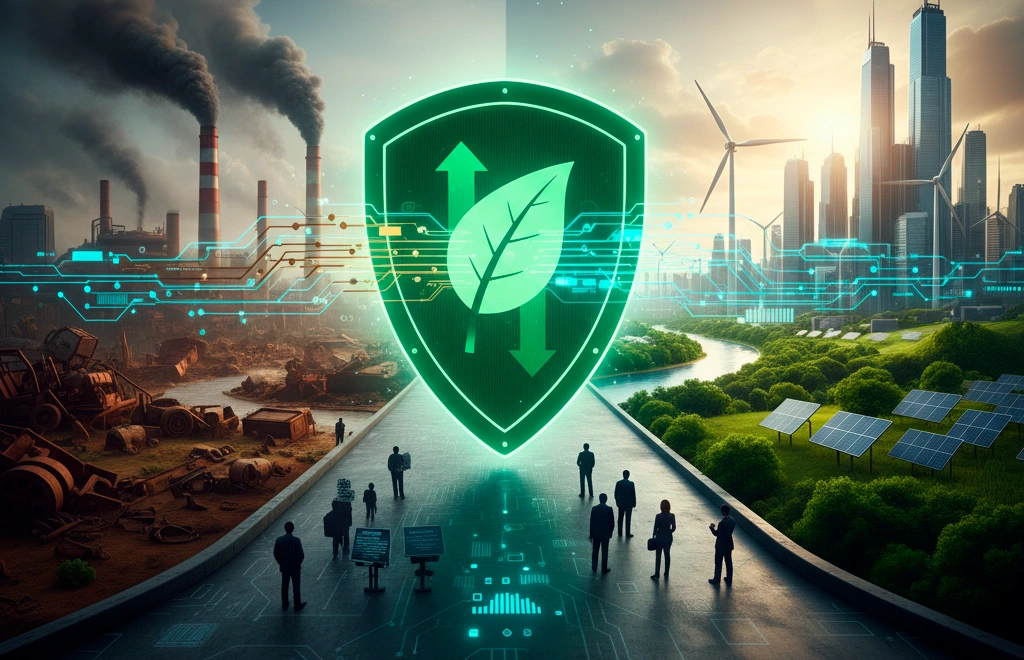
Strategy for reforming environmental supervision until 2029: new rules of the game for the state and business
On June 25, 2025, the Cabinet of Ministers of Ukraine approved Resolution No. 625-r, which adopted the Strategy for Reforming the State Supervision (Control) System in the Field of Environmental Protection and Natural Resource Use for the period until 2029. At the same time, an Operational Plan of Measures for 2025–2027 was defined, which is intended to lay the foundation for the practical implementation of strategic goals.
The strategy envisages a transition from the old system of inspections, which often had a punitive nature, to a risk-oriented control model. This means that enterprises with a low level of environmental risks will be inspected less frequently, and attention will be focused on facilities whose activities may have a significant impact on the environment. One of the key steps will be the creation of a unified digital register of inspections, which will ensure transparency in the planning of supervisory measures and prevent duplication or unjustified assignment of inspections.
A positive innovation can be considered the strengthening of the preventive approach. Instead of punishing enterprises only for violations, the state will try to implement risk prevention tools — consultations, information campaigns, digital services for self-inspection. As a result, businesses get the opportunity not only to avoid fines but also to improve their own environmental efficiency.
At the same time, the strategy causes discussions. On the one hand, it should reduce administrative pressure on enterprises, make the supervision system clearer and more effective. On the other hand, there is a risk that digitization of processes will be delayed, because such reforms require not only political will but also serious funding, modern technologies, and personnel training. Experts also warn that during the transition period, enterprises may find themselves in a situation of double standards: new rules will formally apply, but old control approaches will actually remain.
In general, the strategy corresponds to the European vision of environmental management, which Ukraine has taken as a guideline in the process of European integration. Success will depend on how quickly the state can implement digital tools and ensure an honest, equal for all supervision model. If these steps are implemented, the new system can become not only effective but also a partnership — focused not on punishment, but on the development of environmentally responsible business.