Why unscrupulous businesses are blocking the bill on environmental control
In 2020, businesses reimbursed only about 4% of the accrued amount for environmental damage. How the industrial lobby resists environmental control reform.
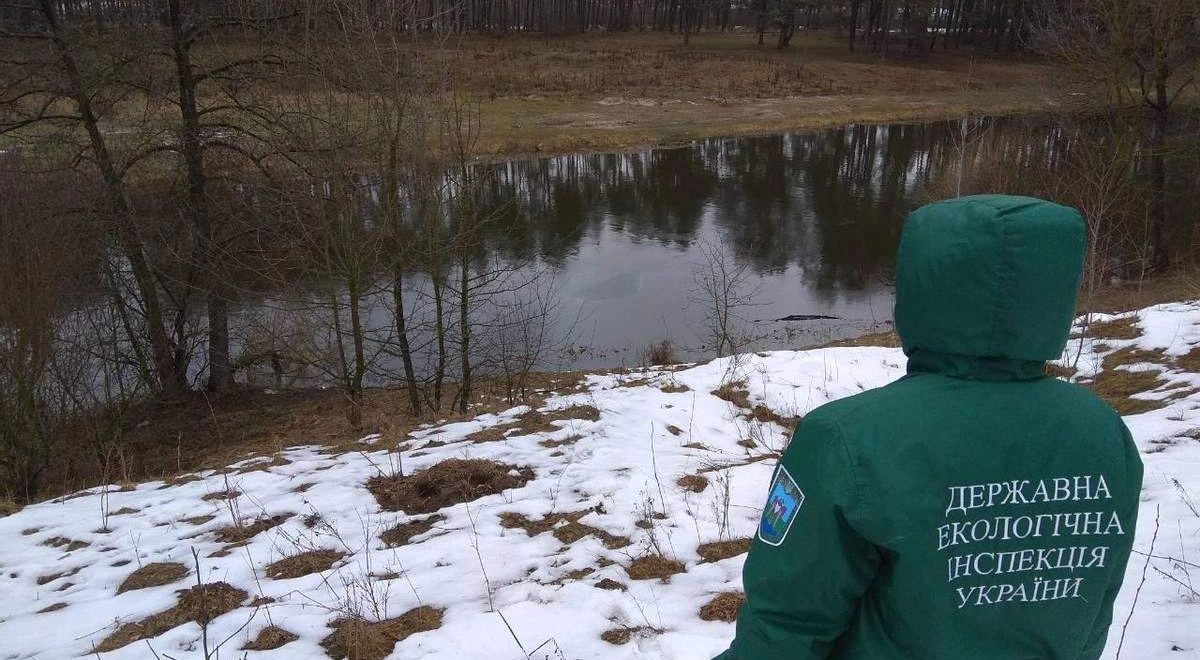
The morning of a state environmental inspector does not begin with coffee, but with denial of access to an inspection at a polluting enterprise.
In 2020, about 300 denials of access by various enterprises were recorded, and this situation has been going on for at least the last 7 years. This is directly stated by the Head of the State Environmental Inspectorate, Andriy Malyovany.
Last year, out of UAH 2.2 billion in accrued environmental damage by unscrupulous businesses (the real amount of which is much higher, as acknowledged by auditors and eco-inspectors), only almost 4% — UAH 81.9 million — was reimbursed.
This is why the industrial lobby spreads fakes and manipulations about environmental control reform among deputies and government officials in the most popular media.
What threatens a violator for denying access to an enterprise? Only a fine of UAH 750. This is enough to officially "buy off" pollution, the results of which we and our children feel every day.
On April 15 this year, Akhmetov's Burshtynska TPP did not allow eco-inspectors to conduct an inspection, who responded to a citizen's appeal about violations in terms of atmospheric emissions.
DTEK's official explanation is that a citizen's appeal CANNOT be a reason for an inspection. In other words, we were all told directly: we don't care what you breathe, your appeals are not a reason for us to open the doors to inspectors.
It also happens that even an order from the prime minister or president is not a reason for polluters to conduct an inspection.
A few years ago, Dmytro Firtash's PrJSC "Severodonetsk Azot Association", the third largest ammonia producer in Ukraine, did not allow inspectors to enter by order of the prime minister, and it didn't matter that the last inspection there was conducted back in 2013.
The same happened at "Ukrnafta" (more than 40% owned by Ihor Kolomoisky) in April this year, but the enterprise did not allow state auditors during the execution of the President's Decree.
Conclusion: it is necessary to change the environmental control system and reform the State Environmental Inspectorate as soon as possible.
This can only be done legislatively, and such an opportunity exists today. Already today, May 12, the relevant committee will consider bill № 3091 "On State Environmental Control", which should start the reform.
Interests of the business lobby
In the imagination of unscrupulous businesses, the best environmental control reform is its absence.
Environmental "control" today looks like this: a limited circle of entities appealing to regulatory bodies regarding an inspection (our appeals are not a reason for polluters to allow inspectors), no responsibility for denying an inspector access to an enterprise (UAH 750 fine while environmental damage is accounted for in billions of hryvnias).
10-day notice of inspection (but it's not a fact that it will happen), conducting an inspection only in the presence of the manager (who always disappears through the "back door" or goes on sick leave retroactively) and only on working days and hours (although residents observe emissions at night and today there is no legal way to properly record them).
Ideal conditions for abuse, and they exist for a reason. After all, denying an inspector access to an enterprise and an overly complex inspection procedure has a specific goal: to prevent proper recording of violations and to challenge the results of the inspection not due to the absence of damage caused, but due to procedural issues, such as the absence of the manager at the workplace.
Because of this, there is a chasm between the actual damage caused, the damage calculated by inspectors, and the amount reimbursed to the budget.
To remain untouchable and bring super-profits to its shareholders without any responsibility for environmental damage, unscrupulous businesses spread fakes and manipulations about the bill to discredit it in the eyes of deputies and statesmen through the most popular media.
In some TV reports, they depicted armed ninja inspectors who can come to an enterprise at any time without reason and close it down.
Let's break down step by step what the bill actually proposes and why honest businesses have no reason to worry.
Come in 10 days
The specifics of environmental control lie in the operational detection of pollution sources, and the current norms on notifying business entities 10 days in advance do not contribute to this at all.
Citizens complain about environmental polluters, and eco-inspectors go for inspection only a few weeks (or even months) after being notified of its conduct.
As a result, unscrupulous businesses have enough time to destroy evidence of their involvement in pollution and reduce their emissions at the time of an unscheduled inspection.
Unscrupulous businesses consider the elimination of this norm as additional pressure. But let's draw a clear analogy. For example, law enforcement officers learn that hooligans are in an apartment next door to you.
To prevent this, it is necessary to immediately arrive at the scene, and not warn the offender 10 days in advance of your visit. The system of operational control works throughout Europe and is absolutely justified in terms of preventing environmental pollution.
Who can initiate an inspection
Perhaps the most common reason for unscheduled inspections is a complaint from an individual regarding a violation of environmental legislation.
At the same time, specialized public organizations that thoroughly study environmental protection issues are limited in submitting appeals for unscheduled inspections.
The same applies to local self-government bodies, on whose territory violations of environmental legislation occur, and the Human Rights Commissioner, when violations of citizens' environmental rights by business entities become known.
Bill No. 3091 regulates these issues, detailing the grounds for unscheduled inspections characteristic of the environmental sphere.
Unscrupulous businesses believe that a few new applicants who may have information about violations of environmental legislation should not have this right.
Also, in their opinion, it is necessary to prove the damage caused to the legal rights and interests of the applicants and to add copies of documents that can confirm the existence of the violation.
In fact, this is a cunning way to completely block unscheduled inspections, because documents to confirm the offense can only be obtained within the framework of an inspection (which will be impossible to initiate).
Inspections only during the economic activity of the enterprise
The lobby successfully manipulated the media by spreading a "horror story" about inspections on holidays and weekends, portraying the eco-inspector as a Grinch who stole Christmas.
But the bill refers to inspections during economic activity. It is quite logical that it is at this time that it should be possible to come for an inspection, even if it is night or Easter, contrary to internal labor regulations.
Citizens see how emissions are made, complain, but eco-inspectors cannot record violations due to legislative restrictions. Bill No. 3091 corrects this gap by allowing unscheduled inspections during non-working hours if economic activity is carried out during this period.
Businesses consider this additional pressure and want to preserve loopholes that will allow them to pollute the environment with impunity during non-working hours.
Conducting an inspection in the presence of the head of the enterprise
The practice of previous years has shown that as soon as an inspection begins, the head disappears from his workplace, and with him — the possibility of conducting an inspection due to legislative restrictions.
The bill proposes to give the head (his representative) the right to be present during the inspection, but if he does not exercise this right, then within 4 hours the inspector will be able to proceed with the inspection in his absence. Businesses insist on maintaining this mechanism for blocking inspections.
Responsibility for pollution and sanctions
Low fines (750 UAH) for not allowing inspections motivate businesses not to let eco-inspectors into their territory.
The authors of the bill propose to introduce administrative and economic sanctions for not allowing inspections to guarantee environmental control measures, but this by no means means that the work of the enterprise can be stopped at any moment, for this it will still be necessary to obtain a court decision.
Businesses believe that this will lead to abuses by eco-inspectors, but if the law is complied with, nothing changes for businesses.
Moreover, abuses by eco-inspectors can result in disciplinary, administrative, or even criminal liability for them, and businesses will be able to recover damages from the state.
And this is important, because the lobby believes that inspections at the request of individuals will become a tool in the hands of competitors, which sounds strange and absolutely does not correspond to reality.
As we can see, the key concerns of businesses regarding the bill are significantly exaggerated and aimed at preserving the current rules with a weak regulatory body in the field of environmental control.
At the same time, the comprehensive goal of the bill – changing the philosophy of state environmental control – is not taken into account.
The number of offenders brought to justice will no longer be the criterion for the effectiveness of the environmental control body.
If bill No. 3091 is adopted, the main activity of eco-inspectors will be aimed at preventing violations of environmental legislation.
Moreover, the new procedure for environmental control measures provides for digitalization and full transparency with photo and video recording of the inspection process, so law-abiding businesses have nothing to fear.