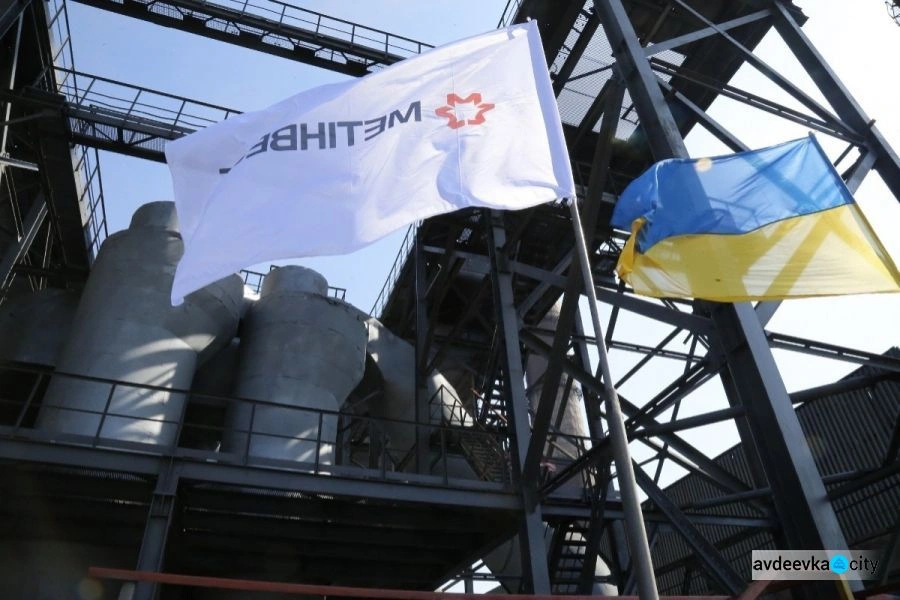
Metinvest has completed the largest environmental project in the history of Ukraine
The large-scale environmental modernization of the Ilyich Iron and Steel Works agglomeration plant lasted more than seven years, and today the project is completed. The cost of reconstruction is over $160 million.
Pipes no longer smoke
Until recently, the agglomeration plant accounted for 80% of all emissions from the enterprise and up to 40% of dust emissions in Mariupol. Today, not a single pipe of the agglomeration plant smokes. And the level of emissions has been brought to European standards.
After the phased commissioning of all new filters, dust emissions will decrease by 90%, sulfur emissions - by 46%. In general, thanks to the project of reconstruction of the agglomeration plant's treatment facilities, dust emissions in Mariupol will be reduced by a third.
The main supplier of equipment and technologies was the Italian company Termokimik Corporation. The general contractor of the project is Metinvest-Engineering.
"With this project, we have once again proven that we can keep our word. In recent years, we have faced many challenges, but we continued to modernize the agglomeration plant's equipment step by step, investing considerable funds in it, because we knew how important it was for the residents of Mariupol. Neither the crisis nor the coronavirus prevented us from completing the reconstruction within the promised timeframe. I am grateful to everyone who worked on this, without exaggeration, historical modernization all these years. Now the agglomeration plant at the Ilyich Iron and Steel Works is not only the largest in Europe, but also the most environmentally friendly and modern," said Yuriy Ryzhenkov, CEO of Metinvest Group.
How the purification system works
The technical solution of the project involves the creation of a complex two-stage gas purification system. The first stage is rough dust removal using modern Hurriclone cyclones. They capture large dust particles for reuse in production. The second stage is the final purification of gas from dust and sulfur compounds in powerful bag filters, which allow reducing dust emissions by more than ten times.
"The standards provided for a dust emission level of the agglomeration plant up to 300 mg/cubic meter, and our gas purifiers now provide 15-20 mg/cubic meter with 50 mg/cubic meter established by Ukrainian legislation," said Andriy Panchenko, head of the agglomeration plant modernization project.
Specialists of Metinvest-Engineering company gradually built complexes of two-stage purification of agglomeration gases from sintering and cooling zones of all 12 agglomeration machines.
The modern gas purification system at the agglomeration plant is already working. At the same time, in the cooling zone of agglomeration building No. 1, work continues on the modernization of Speyk electrostatic precipitators and the installation of two bag filters, which will be completed in 2021. These are additional obligations that the plant has undertaken.
"We are completing a project that has lasted more than seven years - one of the most important in the modern history of the enterprise. The agglomeration plant really urgently needed modernization, and Metinvest Group made a timely decision. Reducing the environmental burden is one of the priority tasks that Metinvest sets for us. But the most important thing is that such difficult tasks are always supported by finances and specialists. Today, the pipes of the agglomeration plant no longer smoke. Our next goal is blast furnace conversion, and we will definitely achieve it as well," emphasized Taras Shevchenko, CEO of Ilyich Iron and Steel Works.
Italians and coronavirus
The history of the agglomeration plant's reconstruction, like the history of Ukraine, is full of various events and unexpected turns.
When the project was already on the home stretch, the coronavirus pandemic broke out in the world. During commissioning, Termokimik Corporation specialists had to install software, as well as carry out cold and hot scrolling of the aspiration system equipment. But the Ministry of Foreign Affairs recalled all foreign specialists working in Ukraine, and in early spring the Italians were forced to hastily leave the country. The Italian government announced a strict quarantine and closed the offices of industrial companies, including Termokimik.
By mid-summer, the virus had subsided a bit, and the easing of quarantine finally made it possible to put an end to the modernization of the sintering plant. Italian specialists returned to Ukraine to complete the equipment adjustment and complete the project within the terms promised to the residents of Mariupol.
reconstruction chronicles
The environmental modernization of the sintering plant started at the end of 2012. Then the main technical solutions for gas cleaning systems were developed and design and estimate documentation was developed. And in 2014, Metinvest and Termokimik signed an agreement for the supply of main technological equipment. This was the start of the active phase of project implementation.
The large-scale construction at the Illich Iron and Steel Works lasted five and a half years. All this time, a team of Ukrainians and Italians worked on modernizing equipment at the operating production facility. The installation of cyclones and bag filters - structures weighing hundreds of tons - was carried out in record time. Nowhere in the world are such large-scale gas cleaning systems being built at sintering plants. And all this so that none of the five pipes of the sintering plant would darken the Mariupol sky.
July 2012. Metinvest decided to environmentally modernize the Illich Iron and Steel Works sintering plant.
August-December 2012. Technological development was carried out and technological solutions for project implementation were developed.
December 2013. Metinvest signed an agreement with the Italian technology and equipment supplier Termokimik Corporation for the development of basic engineering for the sintering plant modernization project.
December 2013 - May 2015. Project documentation for the reconstruction of the sintering plant was developed.
August 2014. Metinvest signed an agreement with Termokimik Corporation for detailed engineering and supply of gas cleaning equipment for the sintering plant.
May 2015. Construction work began at the Illich Iron and Steel Works sintering plant.
May-December 2015. High-efficiency Hurriclone cyclones were installed on sintering machines No. 1-3 in the sintering zone.
July-December 2016. Hurriclone cyclones were installed on sintering machines No. 4 and 5 in the sintering zone.
May-December 2017. New cyclones were installed on sintering machines No. 6-8 in the sintering zone and on sintering machines No. 7-9 in the cooling zone.
March-December 2018. Sulfur cleaning systems for sintering machines No. 7-9 in the sintering and cooling zones were put into operation. Hurriclone cyclones were installed on sintering machines No. 9-11 in the sintering zone and on sintering machines No. 10-12 in the cooling zone.
February - March 2019. New cyclones were installed on sintering machine No. 12 in the sintering zone.
January 2019 - November 2020. Sulfur cleaning filters were installed on sintering machines No. 1-6 and No. 10-12 in the sintering and cooling zones. The construction of bag filters was completed. Commissioning works were carried out.
November 2020. The two-stage gas cleaning system at the sintering plant is operating.