"Hot Seven": What environmental problems Kyiv needs to urgently address
The city urgently needs modernization of heat infrastructure and water supply, to close overcrowded landfills and solve the problem of traffic jams
In 2020, ecology became more than just a trend. The ecological laboratory notes that the environment has rebelled: fires, dust storms, smog, blooming rivers. For the first time, remaining in their native country due to the coronavirus pandemic, Ukrainians were finally able to look around and realized what problems thoughtless handling of the piece of the planet we live on leads to.
This is especially true for large cities. Since Kyiv, as the capital, is a mirror of the entire country, and the number of "eco-parties" in local elections is off the charts, Delo.ua correspondent collected the main problems that Kyiv residents have been suffering from for decades, and which the future mayor and local deputies will have to fight sooner or later.
"Radical"
Mercury Chernobyl - this is how all media have been calling the "Radical" plant for many years. Since 1954, it produced polyurethane foam, potassium chlorate, and hermobutyl. For this, mercury was used, which "planned to leak" and as a result, about 200 tons of dangerous metal accumulated in the soil and foundations of the buildings. Since 1996, the enterprise, which by that time had managed to pass into private hands, has not been operating, having closed with all possible violations of environmental standards.
As of 2020, there are more problems than solutions with the demercurization of "Radical". Firstly, it is a private enterprise, so solving its problems at the city's expense is difficult purely procedurally (and will likely cause protest from city residents who live far from the plant's territory).
Secondly, the only enterprise that had the capacity to dispose of mercury (partially) - LLC "Mykytrtut" - remained in the occupied territory of Donetsk region.
That is, to process mercury, you need to either build a new plant or export dangerous substances abroad - to Great Britain or France. And finally, thirdly, to collect all the mercury and export it, more than 1.3 billion UAH are needed. In general, one can do a lot of PR on this topic, but its solution is a complex and difficult issue, which no one is yet able to answer.
"Radon"
The State Specialized Enterprise "Association" Radon "was founded in 1960. It was created to collect, transport and store radioactive waste. Radioactive waste is not spent nuclear fuel, that is, not uranium rods that have given their energy to reactors. These are "non-nuclear" cycle wastes - they are "created" by hospitals, industrial enterprises and scientific institutions. In fact, parts of X-ray machines, various dials, parts of measuring instruments, and so on.
Initially, "Radon" was conceived as a full-fledged burial ground. But already during independence, the authorities decided that leaving radioactive waste near Feofania and Koncha-Zaspa was somehow inconvenient and made it "temporary". Especially since in 1995 there was a tritium leak, which was eventually found in nearby rivers.
In different years, various authorities of Kyiv and Ukraine came up with what to do with the contents of "Radon" - and, in general, the idea was simple: somehow collect everything that is there and take it for reburial to another radioactive waste storage facility - the "Vector" object, which is located in the Chernobyl zone.
However, since, according to the old saying, there is nothing more permanent than temporary, it is already 2020, and the cart is still there. The reason is simple: there is no money to remove thousands of tons of solid and liquid radioactive waste. The last time "Radon" was discussed was in 2017 - then they promised to completely clean the storage facility in 5-7 years.
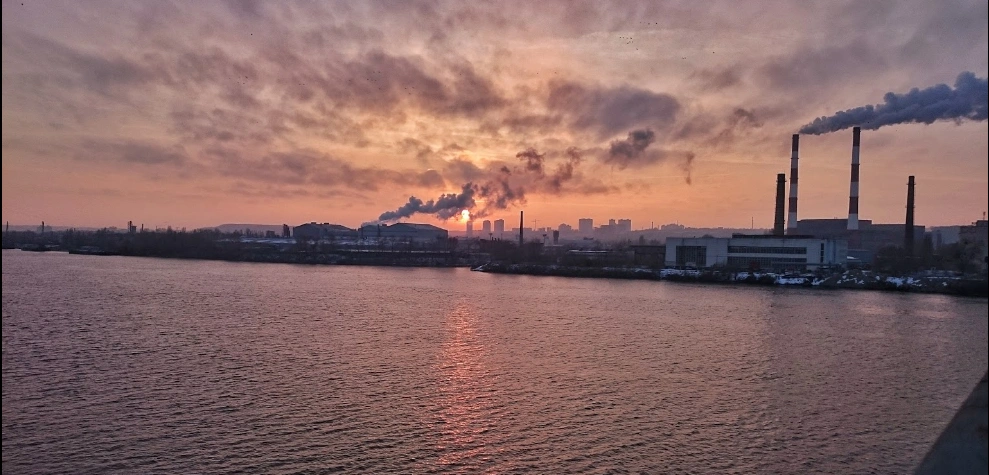
The utility company "Kyivteploenergo" provides the capital with heat and hot water. Its activities are accompanied and controlled by the municipal housing and communal services department and the Kyiv City Administration.
The enterprise operates CHP-5 (1971), CHP-6 (1981) and the "Energiya" plant (1987).
Most complaints are about the latter - residents of nearby areas constantly complain about unpleasant odors and smoke.
To be fair, the issue is being resolved: in 2020, "Energiya", which disposes of a quarter of the capital's garbage and heats Kyiv residents' homes, was stopped for modernization. In autumn, the overhaul of electrostatic precipitators is being completed - to be ready by the start of the heating season. The electrodes that "magnetize" dust particles have been replaced in the electrostatic precipitators. New electrical equipment has been installed. Collected dust is deposited in special tanks. At the same time, a large-scale project for the construction of chemical treatment of flue gases was launched (the price of the issue is UAH 874 million). Upon its completion, emissions should comply with European environmental standards. Currently, the plant is conducting an experiment - a chemical treatment model is working to select the most effective composition of reagents. The work is promised to be completed in 2022.
Also, "Kyivteploenergo" repaired six power units of CHP-5 and CHP-6 and 11 hot water boilers. The issue of air emissions is also present here, but since all facilities operate on natural gas, it is not so acute. Fuel oil was last used during the "gas wars" between "Naftogaz" and "Gazprom", which ended after Ukraine began supplying blue fuel from Europe.
The pipes cause some concern. In total, Kyiv has 2.7 thousand km of main and distribution networks. 230 km have been replaced in two years. The rest are in a rather deplorable state. To see them live, it is worth going on an excursion to the nearest repair.
"Kyivvodokanal"
The most famous problem of the utility company "Kyivvodokanal" is the Bortnychi aeration station. It was designed for three million cubic meters of sewage, in reality there are already 8.5 million cubic meters, and Kyiv continues to grow, which leads us to some critical point in the future, when the dam will not withstand, and all waste will enter the main artery of the country - the Dnieper River. Reconstruction began there in 2019. The funds - $980 million - were allocated by Japan. Naturally, on credit.
Right now, a new pumping station is being built at BSA for UAH 500 million. It is planned to be completed in December 2021. The old pumping station was built in 1963 and simply cannot cope. The new station will pump 600 thousand cubic meters per day.
But BSA is not the only issue that needs to be addressed in "Kyivvodokanal". A less noticeable, but serious problem is the reconstruction of water intakes. 11 thousand houses in Kyiv and enterprises consume 700 thousand cubic meters of water per day. 60-65% of it is provided by the Desnyanska treatment plant. Half as much - the Dniprovska treatment plant. 10% - 14 artesian wells are actively working. The problem is that water is cleaned with chlorine, chlorine is contained in huge cylinders and its possible leakage within the city is an event, to put it mildly, unpleasant. Artesian stations were switched to a new reagent - sodium hypochlorite.
At the Dniprovsky water intake, a new workshop for water purification with chlorine dioxide was also built in three years - it cost UAH 78 million. Next in line is the reconstruction of water treatment at the largest station - Desnyanska. Which will also cost a pretty penny.
At the same time, "Kyivvodokanal", as the head of the State Environmental Inspectorate Andriy Malyovany told in an exclusive interview with Delo.ua, is currently the largest polluter of the Dnieper River: it exceeded the standards for wastewater discharge into the main artery of the country.
Landfill No. 5
Solid waste landfill No. 5 in the village of Pidhirci was built in 1986. The area of the landfill is almost 64 hectares. Annually, 1.2 million tons of waste are brought there, half of which is "produced" by Kyiv.
Protests against the landfill have been going on for years. Its resource, according to various estimates, was exhausted back in the 2000s, but no one allocated a new place for waste, so garbage continues to be brought here. In 2012, residents of the village of Pidhirci, led by the village head, were even forced to walk through Kyiv with an eco-march: they were made up as "people from the future" suffering from environmental pollution. At that time, the authorities promised to build a waste processing plant there. However, in 2013, the Euromaidan began - and the problem again receded into the background.
Later, there was talk of building four waste processing plants, where the capital's garbage would go. Then, a few years later, they were mentioned again.
As of 2020, nothing much has changed. The plants are not being built. The landfill is being actively patched up - dams are being reinforced, drainage systems and pumping stations are being built.
Darnytsia CHP
Darnytsia CHP, managed by private capital - LLC "Euro-Reconstruction" - is the only one in the city that continues to operate on coal.
In the summer of 2020, the State Environmental Inspectorate finally got there, which had not been allowed into the enterprise since the beginning of 2019. In general, environmental inspectors state that the situation has improved: a number of boilers have been converted to natural gas, the ash dump is being watered, and trees have been planted around it. Next year, they promise to start the reclamation of the ash dump, which will be closed in 2022 after all boilers are equipped with electrostatic precipitators.
At the same time, the enterprise takes more water for its activities than provided by the average daily water intake norms. 7 administrative protocols have already been drawn up for the CHP, the preliminary amount of damage to the environment is up to 1 million UAH.
Cars
In general, 70-85% of all air pollution in Kyiv is caused by cars. Which are stuck in traffic jams, because Kyiv suddenly became a world leader in this indicator.
Last year, the Sreznevsky Central Geophysical Laboratory compiled a list of the most polluted places in the capital. These are the areas of Demiivska and Bessarabska squares and Semena Sklyarenka street.
Slightly fewer problems are on Peremohy Avenue ("Sviatoshyn"), Obolonsky Avenue, Oleksandra Dovzhenka Street ("Shuliavska"), Peremohy Square, Lesi Ukrainky Boulevard and in the area of "Chernihivska" metro station.
The laboratory also notes: the highest level of air pollution is precisely where the largest highways pass.
Conclusion
All this is the tip of the iceberg of the capital's problems. There is also pollution of small rivers. Mass use of phosphates, causing water to bloom. Burning forests and peatlands around Kyiv.
The main problem of the objects presented above is that there are no alternatives for them yet. Nowhere to take out the garbage. No one to heat the homes of citizens. No one to supply water. Nowhere to put wastewater.
It sounds like fatalism, but such is the reality. No candidate, whatever he or she promised during the campaign, will close the Darnytsia CHP, because half of the Left Bank, whose homes have become cold, will line up under the mayor's office. They will not remove mercury from "Radical", because they need to find sponsors and agree with the state. And of course, they will not forbid capital's motorists from standing in traffic jams.
There is a way out, of course. Since we cannot change everything at once, we need to draw up a strategy for decades, which any government that comes to this city will certainly implement. And within the framework of this strategy, little by little, in small steps, build and modernize, negotiate and close dangerous places. Do not build in sanitary zones. Do not dump waste into rivers.
Otherwise, the critical mass of accumulated infrastructure problems will lead to the fact that they will have to be solved in an emergency.
Dmytro Bunetsky, specially for Delo.ua