More Than Words: Why It's Important for Businesses to Think About Ecology
In recent years, the trend for an ecological lifestyle has only been gaining momentum. Many of us already sort garbage, try to rationalize the consumption of natural resources, or approach the issue of buying things for life more responsibly. However, let's be frank, the efforts of conscious people alone are not enough to restore the planet.
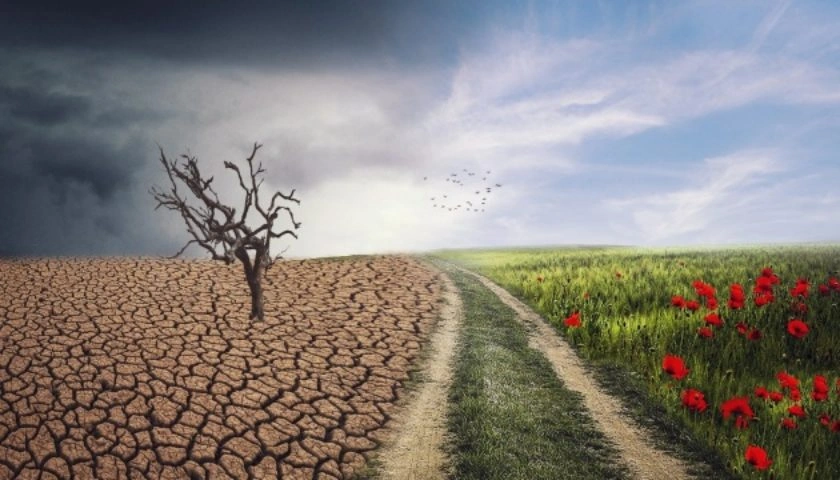
Over the past 100 years of history, humanity has witnessed a great technological boom. Of course, progress has given us a more comfortable life today, but its impact has also caused significant damage to the planet's ecology. Annually, business giants of industry around the world continue to use a huge amount of natural resources, pollute water, produce hundreds of thousands of tons of garbage, and also release tons of CO2 into the atmosphere. As a result, nature responds, and problems such as global warming, droughts, floods, and the extinction of the planet's biodiversity have become part of our reality.
Let's look at a few eloquent facts:
● The Great Pacific Garbage Patch has already reached 1.5 million square kilometers in area - that's two and a half times the territory of Ukraine!
● Annually, about 9 billion tons of garbage are dumped into the World Ocean.
● Due to human activity, forest areas have decreased by 40%.
● The Amazon forests occupy 5.5 million square kilometers and produce about 20% of the oxygen our planet breathes. But over the past half-century, 17% of their vegetation has already been lost, and the level of deforestation in 2020 reached a 10-year peak, according to the United Nations.
● According to UN estimates, over 600,000 people have died from the consequences of climate change in the last 20 years.
The awareness of the impending ecological catastrophe forces not only people but also businesses today to become environmentally responsible to achieve a common goal - the restoration and preservation of the Earth for future generations.
Corporate Social Responsibility
At the state level, many countries have a law "On Environmental Protection," which regulates the activities and inactivities of companies from the perspective of the country's ecology. Sometimes it also includes the concept of business's social responsibility for the consequences of its activities.
Social responsibility is a voluntary contribution of business to improving the state of the environment. It is the readiness to bear costs for social and environmental measures aimed at minimizing the consequences of the company's activities or at other areas of society's life.
Today, corporate social responsibility is becoming not just an option, but a phenomenon that should be the default in every company. This is a competitive advantage over other companies, because according to Nielsen research, 81% of consumers worldwide believe that businesses should care about the environment and should minimize the harm caused to nature.
Environmental responsibility attracts not only clients but also employees. According to research by Cone Communications, 64% of surveyed millennials will not work for a company if it does not have a written and planned social responsibility program. It's time to draw conclusions and implement social responsibility into your business plan if you haven't done so before.
Economy vs. Ecology: where is the compromise?
Achieving balance in attitudes towards the environment is possible only by equating the importance of a company's economic growth with its environmental component.
The first step for any production that wants to reduce its impact on the environment is to measure greenhouse gas emissions into the atmosphere. Once the indicators are known, they need to be analyzed to determine which of the company's activities require attention and modernization for more environmentally friendly operation.
Also, every business can reduce energy consumption within its business processes. Saving on lighting, using energy-saving equipment, disconnecting inactive equipment from power when not needed, abandoning paper workflow - these are the simplest actions that all company employees can take.
What does environmentally responsible business do?
Many businesses around the world are already actively using sustainable development principles in their activities. Here are just a few vivid examples of how businesses are trying to minimize their impact on the environment and reduce the consequences of their production.
● H&M collects old clothes for further sorting and recycling.
● BMW creates educational programs that raise awareness about social and environmental threats.
● The Intermarche supermarket chain and Chipotle decided to jointly combat the irrational use of natural resources and opposed the increase in food waste through the campaign The Inglorious Fruit and Vegetable.
● LEGO Group launches and actively implements a process to reduce the impact of production on the environment, address global warming, and reduce atmospheric emissions.
● The founder of the world's largest corporation Microsoft, Bill Gates, annually spends huge sums on environmental initiatives.
The contribution of every Ukrainian matters
Seventy percent of Ukrainians are confident that the issue of global climate change has worsened over the past five years. Moreover, 83% agree that countering these processes is humanity's most important task. At the same time, 77% confirm that climate change already directly affects the life and health of every inhabitant of the planet. These are the results of a study by Mastercard and UKRSIBBANK BNP Paribas Group.
Mastercard and UKRSIBBANK BNP Paribas Group are two global companies that demonstrate a conscious business approach in their work through their own example. For instance, they are actively involved in the issue of preserving natural resources and supporting the health of our planet.
Yes, Mastercard founded the Priceless Planet Coalition initiative in 2020, which unites the efforts of consumers, financial institutions, merchants, and cities in the fight against climate change. More than 50 companies worldwide have already joined the Priceless Planet Coalition, and the Coalition continues to actively expand. The coalition's immediate plans for 5 years are to restore 100 million trees worldwide — strengthened "Lungs of the Planet" will help reduce the level of greenhouse carbon dioxide.
In 2021, UKRSIBBANK BNP Paribas Group, which exclusively represents Ukraine in the coalition, also joined the project.
Thanks to the bank, every Ukrainian will be able to benefit the project. For example, UKRSIBBANK clients can personally contribute to forest restoration and global warming prevention. To do this, it is enough to make contactless NFC payments with their Mastercard from UKRSIBBANK. For such transactions, the bank will allocate additional funds for planting 75 thousand trees in forests important for the planet in Australia, Kenya, and Brazil — it is here that climatology and forest restoration experts advise doing this first of all to prevent a catastrophe.
Environmental responsibility should become one of the key points in every company's business plan. Then there will be no need to spend efforts on correcting mistakes and reconfiguring business processes. One small action within production or in the office today will help avoid a global environmental catastrophe in the future. That is why it is important for business, as for each of us, to think about it today. Before it's too late.