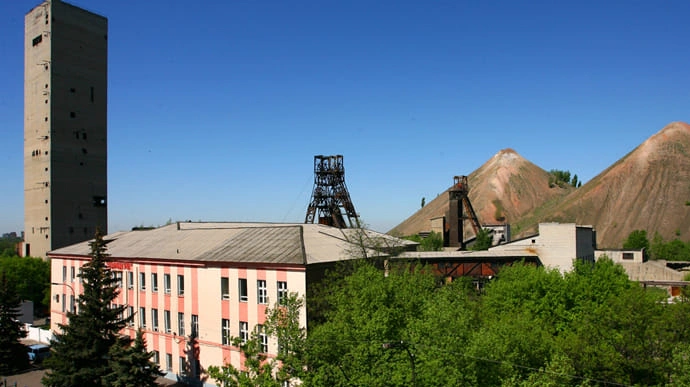
Donbas on the verge of ecological catastrophe
The Donbas, ravaged by war, is on the verge of an ecological catastrophe due to abandoned and derelict mines filling with toxic groundwater.
Source: BBC news Ukraine with reference to NBC News
Details: It is noted that water filled with heavy metals and other toxic substances threatens to contaminate drinking water from rivers and wells. It also makes the surrounding soil unsuitable for agriculture.
In addition, dangerous gas from the mines - methane - is pushed to the surface, threatening earthquakes and explosions.
According to Vasyl Chynchyk, head of the Toretsk military-civilian administration, only 2 of the 7 mines around the city - "Tsentralna" and "Toretska" - continue to operate. Currently, local authorities are forced to pump water out of the mines to prevent a disaster.
In particular, the decommissioned "Nova" mine is currently operating as a pumping station. According to Yuriy Vlasov, an engineer at "Nova", if this mine is flooded, "Tsentralna" will be next, and then toxic water will flow into the Kryvyi Torets and Siversky Donets rivers, "from which the entire Donbas drinks".
In addition to the general economic depression in the region, the war also affects the environmental situation. Currently, 88 out of 121 mines in Donbas are under the control of separatists.
In February, Deputy Prime Minister Oleksiy Reznikov and the head of the Ukrainian delegation to the Trilateral Contact Group, Leonid Kravchuk, warned the UN that militants, by closing some mines, were not taking proper safety measures.
The separatists, in turn, claimed that since 2015, 20 mines under their control had been closed and pumping operations were being carried out there.
However, Ukrainian experts say this is not the case. According to their information, the militants have stopped pumping water from at least 12 mines and do not allow access to them for monitoring.
Experts say that the worst environmental consequences are not expected for another 5-10 years. But the first signs of a catastrophe already appeared in the form of spontaneous flooding of some mines in 2018 and a series of gas explosions, displaced by mine waters, in 2020.