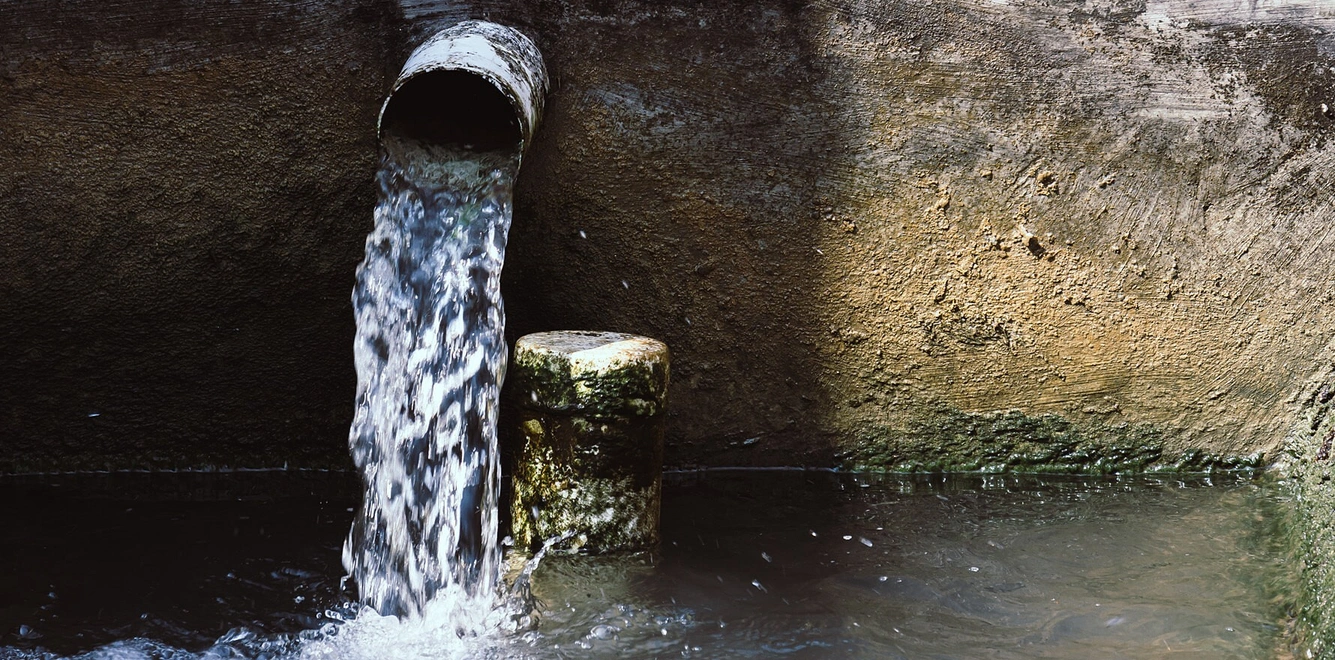
Not a drop. Why Ukraine will soon face a drinking water shortage
According to forecasts by the Institute of Water Problems and Land Reclamation, in 30 years Ukraine will have to import drinking water. Focus found out why the country is threatened by a shortage of the most important natural resource.
According to the UN, more than a quarter of the world's population - 2.2 billion people - do not have access to safe drinking water. By 2050, up to 5.7 billion will live in areas where there will be a shortage of fresh water for at least one month a year. If serious measures are not taken now, by 2040 the global demand for water could increase by more than 50%, while the demand for energy resources - by approximately 25%.
Climate and humans are to blame
Researchers name several reasons for the fresh water deficit. The main one is global warming, which is exacerbated by greenhouse gas emissions into the atmosphere. The problem has been discussed for many years, but it has not been resolved. In Ukraine, one of the reasons for the deficit is deforestation. The root system of trees is a natural accumulator of moisture. When deforestation occurs, rivers go underground. But, perhaps, the most serious problem is water pollution. They become overgrown if fertilizers from fields are washed into them and a large amount of wastewater containing biogenic elements is discharged: untreated or insufficiently treated domestic wastewater.
"Practice shows that violations of environmental legislation in the field of water resources are among the most frequent ones recorded by the State Environmental Inspectorate. In 2020, there were almost 5,000 such violations, most of them in Dnipropetrovsk, Vinnytsia and Kirovohrad regions. The State Environmental Inspectorate estimated environmental damage at almost UAH 200 million, and in 117 cases we submitted materials to law enforcement agencies and hope that criminal proceedings will be initiated," Andriy Malyovany, head of the State Environmental Inspectorate of Ukraine, tells Focus.
rivers of garbage
Many enterprises in the country pollute water bodies.
"One of the egregious cases is the state enterprise "Kryvbas Shakhtozakryttya" which, without a permit for special water use, discharged pollutants into the Inhulets River," Andriy Malyovany gives an example. "The water contained high concentrations of bromine, iodine, sodium, potassium and magnesium, and then people used it for drinking and irrigation of fields. At the suit of the State Environmental Inspectorate, the court obliged the enterprise to compensate for the damage caused to the environment in the amount of UAH 2.5 million."
In addition to industrial and energy enterprises, the main polluters are the water utilities of large cities in the country. Oil products, phenols, organic substances, nitrogen compounds and heavy metals enter water bodies. In the rivers Western Bug, Poltva, Kalchyk, Kalmius, Bakhmut, Luhansk, the content of these substances exceeds the maximum permissible concentrations. The most critical situation has developed in Dnipropetrovsk and Donetsk regions.
"River water is also polluted by phosphates, which are present in almost all household chemicals. Agricultural enterprises open up river banks, where some fertilizers and herbicides are washed away," says the head of the State Environmental Inspectorate. "Often, coastal zones are cluttered with landfills, garbage gets into rivers, where garbage plugs then form. In the Carpathian region, this has already reached catastrophic proportions and provokes international scandals. In the first two months of 2021, 1.5 thousand cubic meters of waste of Ukrainian and Romanian origin entered Hungary via the Tysa River."
According to Andriy Malovany, to protect water bodies, it is necessary to modernize water supply and sewerage networks, treatment facilities, clear large and small rivers of garbage, and prevent their shallowing. But this is a long process. To begin with, it would be good to strengthen the responsibility of local authorities and significantly increase fines. Today they are meager, for example, for water pollution - 119 UAH. Bill No. 2765, which provides for an increase in fines to an amount of 1700 UAH, has only been adopted in the first reading.
A well won't save you
"The water shortage won't affect me, I have my own well," thousands of Ukrainians think. But drilling wells is another reason for the depletion of underground water horizons; tens of thousands of rural residents have faced the fact that the water is gone.
"We have no control over well drilling, everyone does what they want on their plot of land," says Oleksandr Koval, an eco-activist.
According to Andriy Nelipa, deputy head of the public council at the Ministry of Ecology and Natural Resources, a working group has been created in the ministry to prepare a Water Strategy. It should regulate all problematic issues in this area at the national level and determine the course of action for the next 30 years. In addition, on April 9, the Ministry of Ecology submitted to the Cabinet of Ministers a draft of changes to the "Technical Regulations for Detergents". The document provides for fundamental changes in the production and import of phosphorus-containing household chemicals. "This is the result of the efforts of concerned public and expert circles, acting thanks to the assistance and influence of the European Union and international projects. If it weren't for this, the authorities would still be shrugging their shoulders," Nelipa is convinced.
Ukrainians understand that the shortage of water resources is a huge challenge for the country. Andriy Malovany, referring to the results of a sociological survey by the Gorshenin Institute, says that more than half of citizens consider water pollution and drinking water shortages to be the main environmental problem of the country. And it needs to be solved comprehensively, involving all the capabilities of the state and business, as well as public initiatives.