The Black Sea will be filled with jellyfish, and the inhabitants of Ukraine will begin to die out - American ecologist
Our country is very vulnerable to atmospheric phenomena associated with global warming
The outgoing February, in general, turned out to be quite snowy and frosty. Therefore, the winter of 2021 turned out to be much colder than the previous one. But the overall climate situation is not favorable. Ukraine is very vulnerable to atmospheric phenomena associated with global warming. Summers will become drier and hotter. This will destroy agriculture and may also have catastrophic consequences for the lives of Ukrainians themselves.
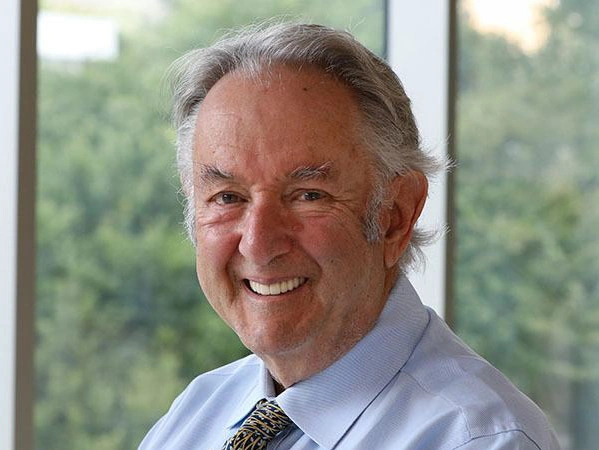
This was stated in an interview with "Apostrophe" by American-British biologist, ecological theorist, specializing in biodiversity research and species conservation, one of the most cited foreign scientists, STUART PIMM.
- In your opinion, what is happening on the planet now?
- We are changing the planet in ways that are becoming increasingly harmful to the environment, animals and plants, which are now dying out much faster than they should be.
In general, these changes in the environment are beginning to harm us. And this pandemic, from which we all suffer, is a consequence of human abuse of nature. And if we want to prevent future epidemics, we must treat nature much better than we do now. We are changing the climate, soils through improper land use, destroying rainforests, pristine prairies, steppes around the world. We are catching more marine life than we need. We are doing many things that indicate that we are using nature thoughtlessly.
- Which animals and plants are most at risk?
- We know of many species that are on the verge of extinction. They are concentrated in special places around the world that we call "biodiversity hotspots". These are places like Central America, the northern Andes, Brazil, Madagascar, Southeast Asia.
But! It is important to understand that we are destroying grassland species all over the world. For example, in Africa, lions and cheetahs are endangered. But humanity is also destroying species in the steppes of Eurasia - from Hungary and Ukraine to Kazakhstan. There is an active change of landscapes there. So we are harming species not only in tropical forests, but even in the Arctic. Global warming harms species in the Arctic more than anywhere else on the planet.
- Global warming is a very speculative topic right now. There are people who say that cycles between cooling and warming on the planet are constant, and we cannot influence them in any way.
- Let me tell you a little about global warming. There are three things we know about it. We know about the concentration of carbon dioxide in the atmosphere. We know that its level is increasing. And the higher this level, the warmer it gets. And we have known the physics of this process for about 120 years, at least. And finally, the third thing is that we know that the temperature all over the world is rising. And this happens year after year. Almost every next year breaks the records of the previous one for global temperature. 2020 was the hottest year on record.
As for species, we also know that rising temperatures harm animals. They move north - where it's colder. And in the tropics, they try to climb as high as possible above sea level so as not to suffer from the heat. So the evidence of global warming is irrefutable. Skeptics will believe that all this is happening when they start to see extreme natural phenomena.
- What could you say about Ukraine?
- Ukraine, in particular, is very vulnerable to heat waves (periodic temperature changes in the environment associated with fluctuations in temperature flows, - "Apostrophe"). So summers will become drier and hotter. This will destroy agriculture and biodiversity. And this can lead to the extinction of people in this territory. You know that heat has already killed tens of thousands of people in Europe.
One can only hope that this will not happen. But the number of extreme weather events is only increasing. And they harm both people and animals.
Read also: Waterless desert: when there will be nothing to drink in Ukraine
- Sometimes it is said that these phenomena cannot be prevented. Do you agree?
- There are many things we can do. To say that we cannot change anything is a mistake. The first thing we can do is to behave more reasonably in the energy sector. In Western Europe, people are beginning to understand that we can live for days or even weeks using renewable energy sources. We can completely abandon fossil fuels - many Western countries are now talking about this.
The second thing is that we can learn to be efficient. It is already being said that within the next 20 years we can abandon gasoline and switch to electric vehicles. People are also learning to save energy. If in the USA a lot of electricity is used per capita, then in Western Europe - significantly less.
US President Joseph Biden canceled the construction of the Keystone XL oil pipeline. The US is now moving away from fossil fuels and switching to wind and solar energy everywhere. Biden is going to promote these new ideas and technologies.
"Green energy" is becoming cheaper and cheaper. And I think my great-grandchildren will look back in time and say - "Why on earth (in the original - whyonearth, - Apostrophe) did they even use fossil fuels? We do without it!"
We can be more conscious in our energy use. More respectful of nature. I think everyone likes to be out of town, in the forest, in the steppe, on the river. And we pose a danger of environmental pollution in places we use for recreation and leisure.
- Do you think we can give up plastic?
- I believe we can reduce the amount of plastic we use. Many Americans take plastic bags when they go to stores. But I take my own bags - I have many of them - and put groceries in them. Plastic bags are a major source of waste. We can give them up.
There are many ways we can give up plastic. We can start recycling plastic, using glass, which is more recyclable. A lot depends on personal choice. People need to learn to behave differently. Isn't it terrible when someone goes to a beautiful Ukrainian forest and leaves plastic waste there? It's selfish. It's dangerous for other people.
We need to learn to be proud of our rural landscapes, the places where we live, and protect them better. We need to write more about beautiful places, show people what their country has, what is special about it. You know, my mother-in-law is from Ukraine. Ukraine has inherited a wonderful legacy of natural and historical monuments.
- You mentioned the COVID-19 pandemic. The phrase "nature has cleansed itself so much that..." has become a meme. Has the pandemic really had such a positive impact on nature?
- Yes, but not very much. This pandemic forced people to stay at home, resulting in less fossil fuel being used. You've probably seen those photos of wild animals walking through empty city streets.
But I see another lesson in this. This disease came about because humans abuse nature. Every year a couple of viruses leak into the human population. Last year it was COVID-19, before that - MERS, SARS, HIV. We get a huge list of viruses from animals because we destroy forests - and tropical forests in particular. We kill them, sell them, eat them as "game". Almost certainly "covid" came from bats that people eat.
China is now a highly developed country and they don't need to eat wild animals to get meat. So-called "wet markets", smelly places with unsanitary conditions, should be closed. Perhaps the virus spread from pangolins, which are traded illegally. This means that such trade should be stopped.
So the main lesson from this pandemic is that we need to be much more careful with how we treat nature.
- Regarding China. This country is the largest emitter of carbon dioxide in the world.
- I worked a lot in China. In my opinion, the Chinese government has learned lessons about environmental pollution and deforestation. And now they are doing a lot to improve the environment. In the 1960s, forests were cut down on a huge scale there. As a result, large-scale soil erosion occurred. Over the past 20-30 years, they have reforested huge areas of their country - especially where erosion has occurred.
China is trying to improve air quality. I remember being in Beijing on days when it was dangerous to breathe there. And recently, the air quality there has become much better. I think China has learned many lessons that it is important for people to reduce pollution and take care of nature. They are making a noticeable contribution to correcting their past mistakes.
- But the idea of political PR on ecology concerns not only China. Populists in all countries are promoting an environmental agenda. How to distinguish them from real activists?
- If a politician promises something, you need to control how he fulfills his promises. If he promotes an environmental agenda, he must report on how he implements it.
- Many international environmental projects, such as the protection of Amazonian forests, actually end up with nothing.
- Let's talk about the Amazon, because it's something I know well. Until 2008, Amazonian forests were cut down sometimes up to 2 thousand square kilometers per year. Since 2008, the Minister of Environment of Brazil has restored up to 20% of what it was.
Now that Jair Bolsonaro has come to power, the pace of deforestation has increased again. As a result, many EU countries are trying to boycott products originating from the Amazon, and thus stop deforestation. Let's see how effective this is, and how long Bolsonaro will stay in power.
- Are economic measures the only effective way to keep the situation under control?
- Economic motivation is a good idea. The SavingNature organization, which I head, helps restore the natural habitat of species, we plant forests. And we get money from people who want to reduce carbon emissions. We are trying to reduce the effects of climate change by planting more trees. We help local communities in developing countries restore their environment.
- How many resources do we have left? How much time can we take them from nature before it becomes a real catastrophe?
- I don't think there's a tipping point in the long run. Some people argue that there's a threshold, and if we cross it, hell will break loose. I don't believe that. But I do believe we need to be mindful of what we're doing. We need to start making more thoughtful choices.
This applies, for example, to overfishing in the Black Sea. You know that if the planet continues to warm, it will be filled with jellyfish? The steppes from Europe and Ukraine to Kazakhstan will turn into deserts. People are doing too many things wrong.
- Unfortunately, people constantly react to this after the fact. For example, this year during the fires in California, about 5 million acres of territory burned down. When the taiga was burning in Russia, Putin said that extinguishing it was not economically viable. So it turns out that people cannot keep the elements under control and only deal with the consequences.
- Regarding the fires in Siberia, I agree - they were massive, extremely harmful to the environment, and occurred in a very remote part of Siberia. I don't think the Russian government could have done anything about it. They were caused by global warming. The forests of Siberia are drying out more than any others. And such phenomena will continue.
What can we do? Use less fossil fuels, switch to renewable energy, and plant more trees. So can Russia stop such fires? No. Can it prevent them from happening in the future? Yes.
- So, can we say that until the world switches to renewable energy sources, things will only get worse?
- You know, I'm not as pessimistic as you are! Look at Western Europe! I'm British myself. Great Britain used only "green" energy for a long time this summer. Western Europe is moving very quickly towards energy efficiency and environmentally friendly energy. So I'm an optimist.