An unprecedented experiment. How Biden's climate plan will change the world
Biden's climate plan is a systemic document that covers all spheres of the country's life, and its implementation could cost the state trillions of dollars
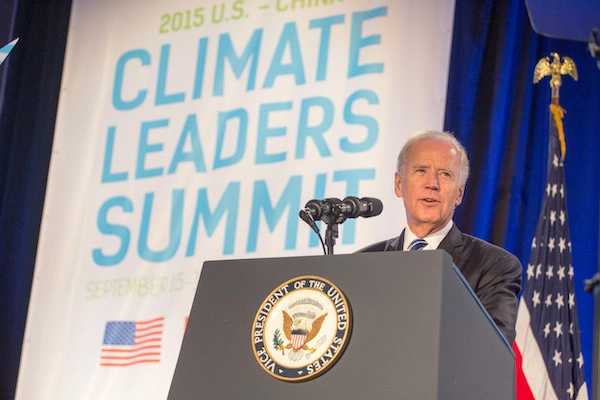
"We have waited too long and can't wait any longer," said the 46th US President Joe Biden, signing decrees to combat climate change in the White House. He became the first leader of the United States for whom climate issues are the basis of his election program. And his actions as president indicate that he will fulfill his promises.
Biden's climate plan is a systemic document that covers all spheres of the country's life, and its implementation could cost the state trillions of dollars.
In the energy sector, Biden and his team are planning grand changes. By 2035, they want to achieve zero carbon pollution. To do this, they seek to attract new investments in clean energy production, as well as adopt an energy efficiency and clean electricity standard, which will simultaneously reduce utility bills and reduce the negative impact of energy on the environment and climate.
The country's housing stock will change dramatically according to Biden's plan - 4 million buildings will be modernized, making them energy efficient. In addition, they want to build 1.5 million homes that meet modern environmental standards. Among other positive effects, this will create a million jobs in construction, engineering, and the supply of building materials. Construction norms themselves will be adapted to environmental needs. Thus, by 2035, the carbon footprint from the housing stock will be halved.
Significant investments are planned in creating new jobs that will build new American infrastructure and modernize energy. This will lay the foundations for sustainable development, make the economy more competitive, protect people's health, and most importantly - curb climate change.
In the energy sector, Biden and his team are planning grand changes
Biden's plan focuses on cutting-edge technologies and their continuous improvement. For this purpose, an Agency for Advanced Research Projects in the field of climate will be specially created. Its mission will be to develop new air conditioning systems, environmentally safe household appliances, improve industrial production, decarbonize agriculture, and much more. Special hopes are placed on CCUS technologies (carbon capture, utilization, and storage), which will help various industries become environmentally friendly.
Special attention is paid to the country's automotive industry. Joe Biden promises to use federal procurement opportunities to stimulate demand for environmentally friendly American-made cars, purchasing them for government agency fleets. Car owners will be offered discounts if they wish to replace old cars with new, more environmentally friendly ones. 500,000 charging stations for electric vehicles will be created, and all new buses by 2030 will produce no harmful emissions. New standards for ecological fuel will be developed in dialogue with trade unions, environmentalists, and industrialists.
250,000 jobs will be created to replace closed harmful enterprises in the mining industry. Companies that harm the environment will receive stricter penalties. A department of environmental and climate justice will be established at the Ministry of Justice, which will focus on environmental polluters. And the Environmental Protection Agency (EPA) will operate more effectively. In particular, it will not issue permits for activities that harm the ecology of communities. At the same time, the new administration promises tax breaks and subsidies to entrepreneurs who want to modernize their production by implementing low-carbon technologies.
Environmental justice is a key part of Biden's plan. It is about directing 40% of funding to those people who suffer most from climate change and environmental pollution. These are low-income, indigenous, and people of color in the country. It is in such communities that outdated infrastructure harmful to health will be prioritized for modernization, conditions for access to clean water will be created, and environmental monitoring will be strengthened. The newly created Climate Equity Task Force will coordinate the efforts of a number of government agencies in this direction. Total investments in the environmental justice program, with the participation of private capital and state resources, will reach 5 trillion dollars.
America is already preparing for powerful climate-induced crises. The National Anti-Crisis Strategy for Combating Climate Disaster will develop systemic approaches to respond to each such phenomenon. States will be provided with grants to develop their own measures. And the main attention will be focused on minimizing the impact of climate emergencies on older people, people with disabilities, low-income individuals, and children.
The authors of the plan realize that responsibility for global progress in combating climate change lies not only with the US, although they produce 15% of greenhouse gas emissions. Therefore, the United States is returning to the Paris Agreement on climate and will be a driver of its implementation. In particular, it is already clear today that America will be a leading player at the upcoming climate summit in April. The States also promise to influence China so that it does not finance "dirty" technologies within the framework of the "One Belt, One Road" project. IMF standards, at the initiative of the Biden team, may also be reformed - projects with high carbon impact will be at the end of the queue for funding. G20 countries will be required to stop subsidizing the extraction and use of fossil fuels, which could reduce global greenhouse gas emissions by 30%.
Experts dispute the realism of the ambitious goals of Biden's plan. For example, is it possible to clear American energy of its carbon footprint by 2035, or is it realistic to achieve zero greenhouse gas emissions by 2050? The problem is that the federal government is not omnipotent, and states pursue their own policies. Some decisions of the Biden administration will undoubtedly be challenged in courts, and the consideration of cases will drag on for years.
In addition, environmentalists fear that all these reforms could be rolled back if opponents of climate change mitigation later come to power in the US. A better guarantee of the irreversibility of transformations would be a large comprehensive climate law that would prescribe a clean energy standard. But until Congress adopts it, the Biden administration will pursue its course through executive tools.
The new president has already appointed his special climate envoy (former Secretary of State John Kerry), ordered a halt to oil and gas drilling on federal lands, canceled fossil fuel subsidies, and ordered the purchase of electric vehicles for the government fleet. He also issued an order outlining instructions for specific officials to implement the provisions of the climate plan. Thus, for the first time in world history, the leader of a leading world power has made the climate issue the foundation of his domestic and foreign policy.
Why is this important for Ukraine?
— First, the efforts of the United States, as the world's leading economy, affect every country.
— Second, Biden's plan is a ready-made model that sooner or later will have to be adapted to our realities.
— Third, in the process of its implementation, we will see the strengths and weaknesses of this strategy and will be able to take experience into account.
In any case, it is already clear that Joe Biden's presidency will be a milestone for the whole world. An unprecedented experiment is unfolding before our eyes, in which all the forces of a great power will be directed to combat climate change and to save humanity from an environmental catastrophe.
>